Getting fit in your late 30s when you are starting over

By Greg Benson
Start with a routine you can repeat next week: choose accessible equipment, schedule manageable training sessions, establish a simple food routine, and record a baseline. Your first goal is to practice the process consistently enough to learn what fits.
What my own restart changed about this plan
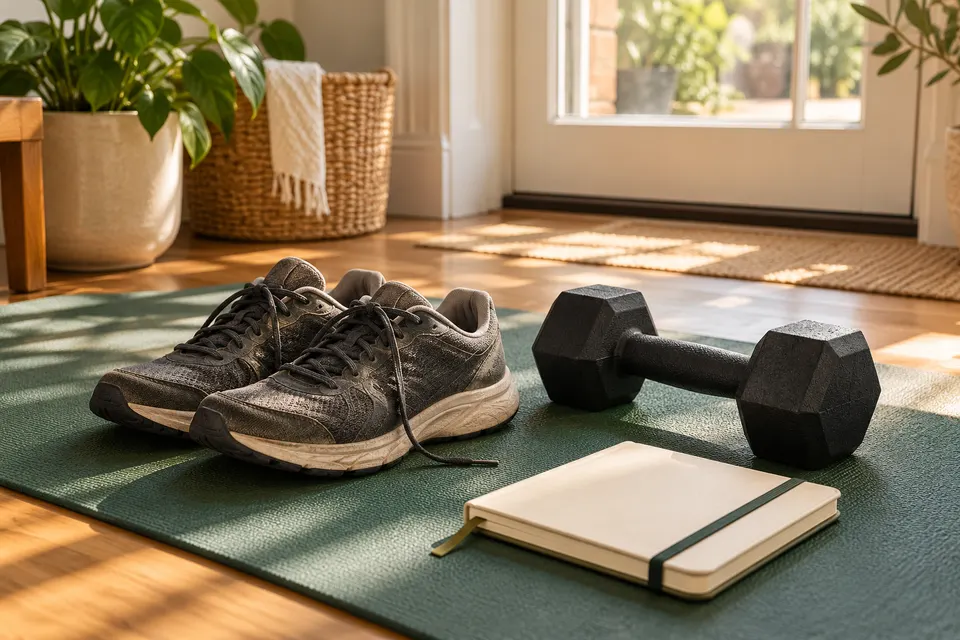
My first reset taught me that a schedule, food habits, and a record of my work mattered. It also taught me how easy it was to make training too punishing. After old habits returned, I started again, trained with dumbbells in my basement, and eventually moved into a gym. Those are the experiences behind this program's manageable first two weeks.
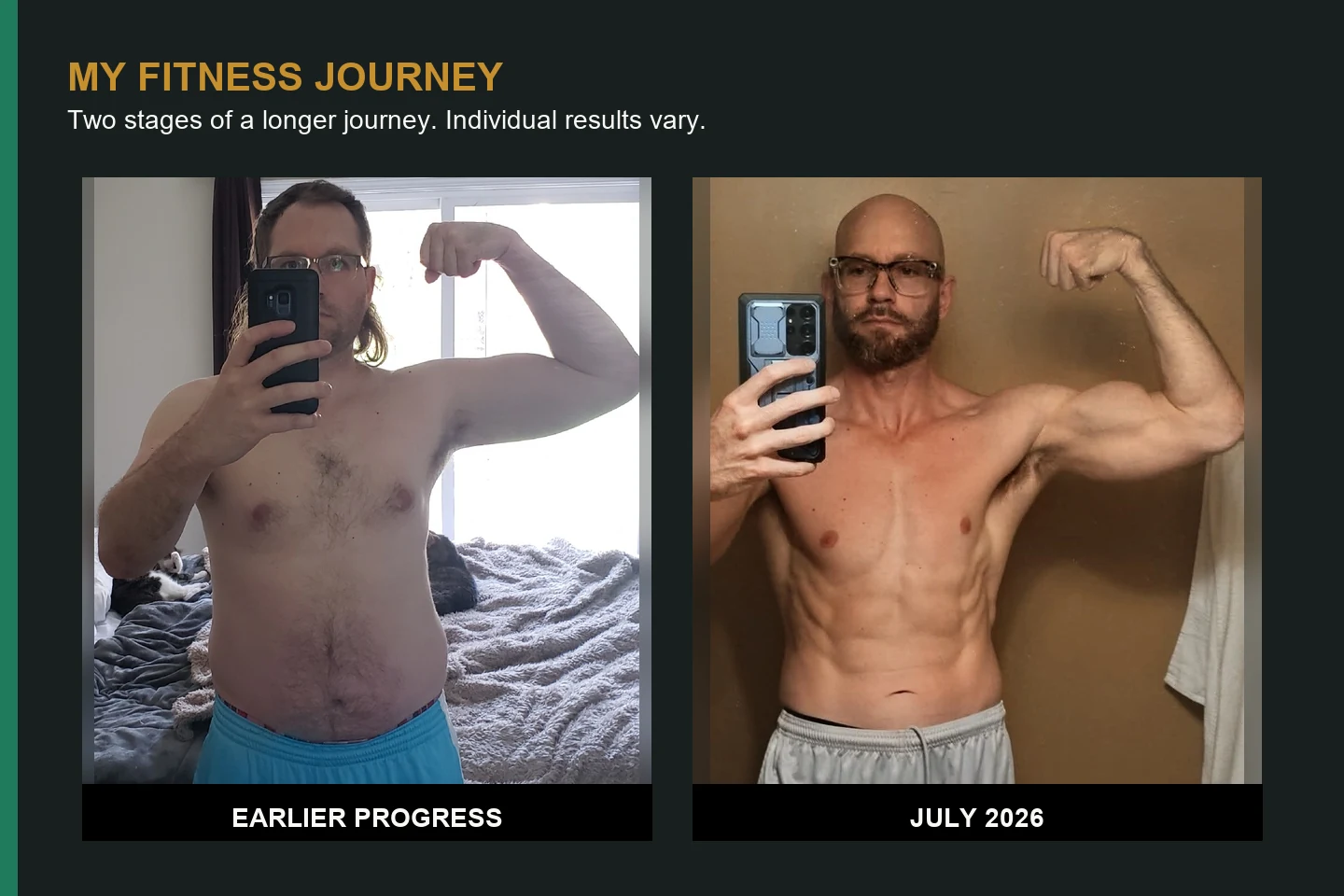
The photos below show stages of my longer journey. My change from 201 to 156 pounds included restarts and years of learning; it is not a result from this 90-day plan. The useful lesson to take from my experience is to build a routine you can return to after a difficult week.
Begin with your real schedule
Write down the days and places where training can actually happen. A home plan with dumbbells can be more useful than a gym plan if the commute keeps cancelling your sessions. Choose your equipment before choosing your exercises.
In Get Fit Before 40, the starting structure is three non-consecutive lifting days. Monday, Wednesday, and Friday is one example. That is the program's format, not a requirement that everyone must meet on day one. If you have been inactive, begin at a level you can manage and build gradually.
Use the first two weeks to learn
The free starter uses light-to-moderate effort and asks you to finish sets with about three or four controlled repetitions still possible. You are learning the setup, movement, and routine. A workout that leaves you unable to repeat it is not useful evidence of a good start.
Before training, do a brief easy warm-up and lighter practice sets. During a set, keep the movement controlled and stop before technique breaks down. Sharp pain, dizziness, or symptoms that concern you are reasons to stop and seek appropriate help.
Make food decisions repeatable
Pick one nutrition method you are willing to use. The program offers serving counts for simpler decisions and calorie-and-macro tracking for people who want more detail. Both require consistency and an honest check of what is actually happening.
For a manageable first step, plan your next few meals and identify the protein food, fruit or vegetables, and other portions. Keep a simple record of what you followed before changing several things at once. The calculator is optional; its results are estimates, not instructions that override your health needs.
A first-week checklist
Use this to turn the intention into a few concrete actions.
- Choose the gym, dumbbell, or bodyweight version you can access consistently.
- Put your training sessions on the calendar, with recovery time between them.
- Record a starting waist measurement and photos if those are useful and comfortable for you.
- Write down the exercise, load, and repetitions after each session.
- At the end of the week, identify what you repeated and one obstacle to remove.
Turn three common obstacles into a plan
Choose the change that solves the obstacle you actually have. These are examples of applying the starter, not promises about how quickly your body will change.
| Obstacle | A practical first step | What to review after a week |
|---|---|---|
| The gym trip keeps getting cancelled | Choose the dumbbell or bodyweight version you can do at home | Did removing the commute make sessions easier to attend? |
| Every restart begins with an exhausting workout | Use the starter's 3–4-reps-left effort rule and record the load | Could you recover and repeat the next planned session? |
| Meal decisions fall apart on busy days | Plan a repeatable meal and prepare enough for another day | Which meal was easiest to repeat, and where did the plan break down? |
Use 40 as a reason to begin, not a deadline for a result
The brand's name reflects Greg's reason for restarting. It does not mean that your fortieth birthday changes the rules overnight or that you must achieve a certain appearance by then. The useful questions are whether your plan fits your life and whether you can keep learning from it.
General adult activity guidance includes aerobic activity and muscle strengthening. Three lifting sessions are the structure of this program, not a complete description of every activity recommendation. Build up your overall activity gradually and seek personal guidance when your health or injury history warrants it.
Sources and program context
Keep learning
Put the first two weeks on your calendar
Get the free starter with six workouts, equipment options, food basics, and a Day 1 baseline.
Start with 14 days free